Why Late August Grilling Needs a Different Approach Than July
Quick Answer: Grilling in late August is genuinely different from July, and the changes are easy to miss. Ambient temperature drops mean the grill loses heat faster, so a charcoal grill that held 400F in July settles lower now and the same cook takes longer. You are cooking in the dark earlier - sunset is roughly an hour earlier than at the solstice - which makes visual doneness cues unreliable. And the produce changed: late summer vegetables are denser and starchier than early summer ones, and they need different heat. Adjust for these three and everything else stays the same.
You cooked the same chicken thighs you have cooked all summer, on the same setting, for the same time, and they came off underdone in the middle.
Late August is a transitional month for grilling in ways that are not obvious until something goes wrong.
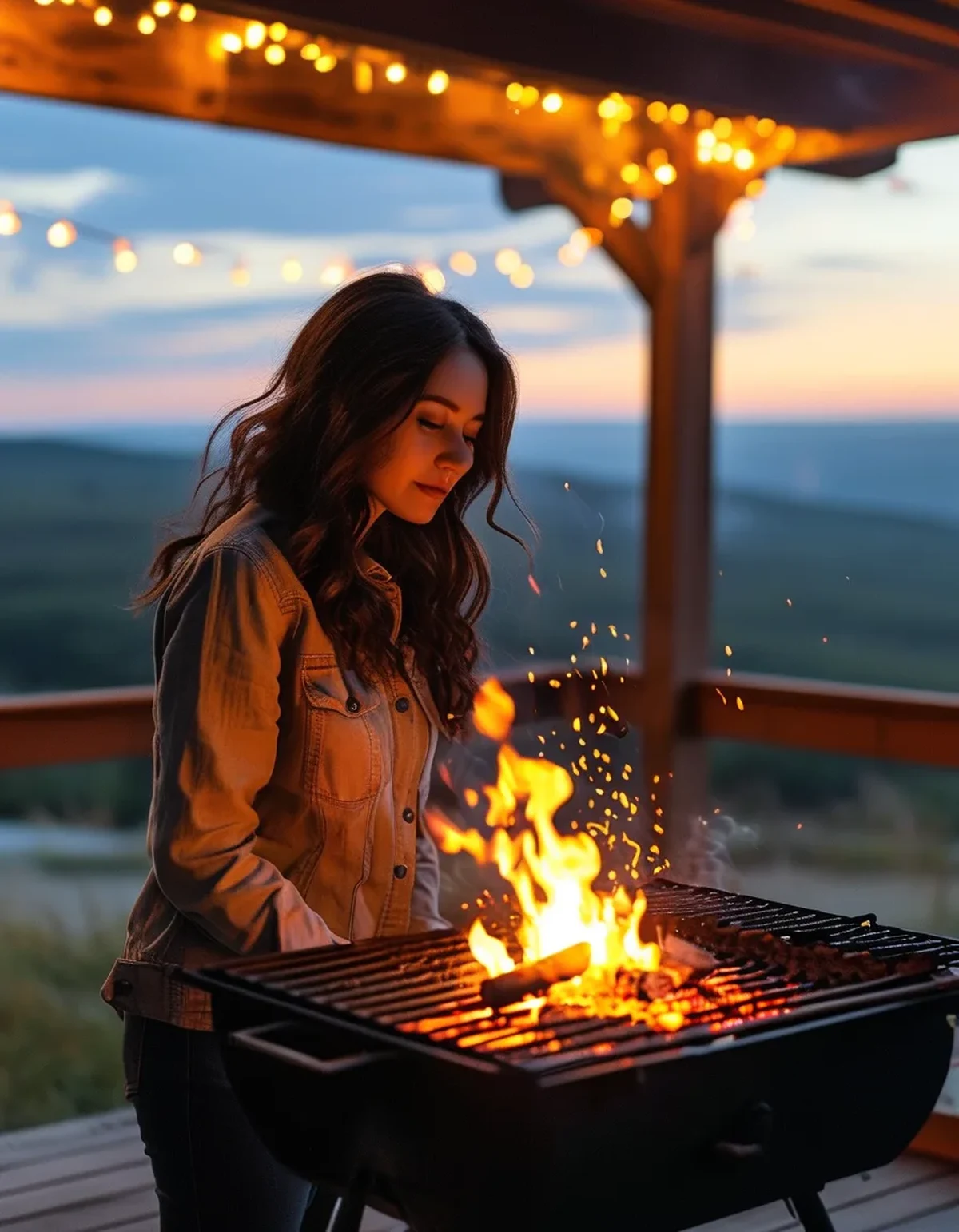
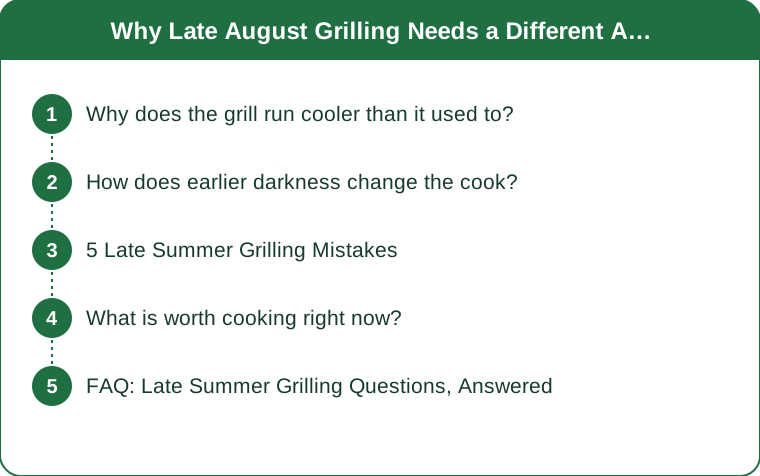
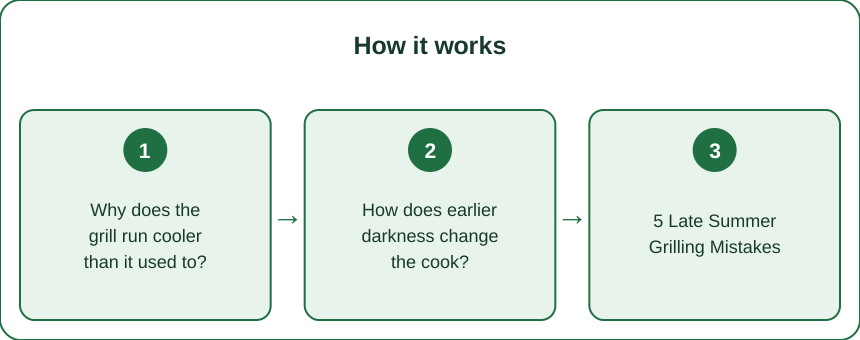
Why does the grill run cooler than it used to?
Because the ambient air is doing less of the work.
A grill loses heat to its surroundings continuously - through the lid, the walls and the vents - and the rate of that loss depends on the difference between the grill temperature and the air temperature. A 500F grill in 90F air is losing heat more slowly than a 500F grill in 65F air.
On a charcoal grill this shows up as a lower steady-state temperature from the same amount of fuel, and a faster decline over the course of a cook. The chimney of coals that held you at 400F for forty minutes in July gives you less time now.
On a gas grill the burner puts out the same energy but more of it goes to fighting the ambient loss, so the same setting produces a lower grate temperature. The dial did not change what it means, but the result did.
Wind is the bigger factor and the one people ignore. A 10mph breeze on a cool evening can cost a charcoal grill a hundred degrees by accelerating heat loss through the body, and it can push a gas grill’s flame around unevenly. Late August evenings are windier than midsummer ones in most places.
The practical adjustments: more fuel than you think for charcoal, a longer preheat for both, and positioning the grill out of the wind. And use a thermometer at the grate, not the lid dome - the gap between them widens as ambient drops.
How does earlier darkness change the cook?
It takes away your most-used doneness cue at exactly the point you need it.
By the end of August, sunset in most of the country is roughly an hour earlier than at the solstice, and twilight is shorter because the sun is dropping at a steeper angle. A 7:30pm cook that was fully lit in June is now happening in poor light.
Most cooks judge doneness heavily on color and surface appearance - the char, the render, the caramelization. Under a porch light or a headlamp those cues are unreliable, and the most common result is meat pulled either early or late by a wide margin.
This is the strongest argument for an instant-read thermometer there is, and late August is when people who have never used one start.
The second adjustment is lighting the grill area properly - not the patio, the grill. A clamp light or a headlamp aimed at the grate changes your accuracy substantially, and it also matters for safety when you are moving hot food in the dark.
And start earlier. A cook that begins at 6:30 instead of 7:30 removes the problem entirely, and late August evenings are pleasant enough that eating earlier is not a sacrifice.
5 Late Summer Grilling Mistakes
1. Using July fuel quantities. Charcoal in cool, breezy conditions burns down to a usable temperature faster and holds it for less time. Build a bigger fire than the recipe assumes, and bank extra coals at the side to add mid-cook. Running out of heat two-thirds of the way through a cook is the classic late-August failure.
2. Grilling late summer vegetables like early summer ones. Late-season zucchini, eggplant and peppers are denser and drier than their July versions, and corn is starchier. High direct heat chars the outside before the inside is done. Drop the heat and extend the time, or cook them over indirect heat with the lid down.
3. Judging doneness by look in bad light. Covered above, and it is the biggest single source of late-August grilling errors.
4. Not adjusting rest time for cooler air. Meat resting on a plate in 65F air loses temperature considerably faster than in 85F air. The ten-minute rest that was right in July can leave food lukewarm now. Rest under loose foil, on a warmed plate, and shorten the rest a little.
5. Ignoring the dew. Late-August evenings hit the dew point earlier, and a cold grate collects moisture. Food sticks dramatically more on a damp grate. Preheat longer than feels necessary and oil the grate right before the food goes on, not at the start.
What is worth cooking right now?
The produce peak is real, and the grill is the right tool for most of it.
Tomatoes are at their absolute best, and grilling halves cut-side-down over medium heat for a few minutes concentrates them into something completely different from raw. Pair with anything.
Peppers and eggplant are at peak and both benefit from the longer, lower cook the cooler evenings encourage anyway. Whole eggplant directly on the coals until collapsed is the single easiest impressive thing you can do this month.
Corn is starting to convert sugar to starch, which means the very fresh corn cooking rules stop applying. Late-August corn benefits from soaking in husk and a longer cook, or from being cut off the cob and charred hard in a pan on the grate.
Stone fruit - peaches, plums, nectarines - are at their last and best. Cut side down, medium heat, four minutes. The sugars caramelize and it takes almost no effort.
And it is the right month to shift toward longer, lower cooks. The whole reason people stop grilling in autumn is that they associate it with fast direct heat on hot evenings. A pork shoulder or a whole chicken over indirect heat with the lid down is more pleasant to tend at 68F than at 90F, and it is where the grill is genuinely better than the oven.
FAQ: Late Summer Grilling Questions, Answered
How much extra charcoal should I use in cooler weather?
Roughly a quarter more than your summer amount for a cool, still evening, and up to half again if it is breezy. It is easier to vent down an over-built fire than to rescue a cook that has run out of heat, and unused coals can be snuffed and reused.
Why is everything sticking to the grate suddenly?
Most likely condensation. As evening temperatures approach the dew point, moisture forms on the cool metal, and a damp grate is a sticky grate. A longer preheat to drive the moisture off, then oiling immediately before the food goes on, fixes it.
Should I change my cooking temperatures for cooler weather?
Not your target temperatures - your target is about the food, not the weather. What changes is how much fuel and time it takes to hold that target, and how quickly the grill drifts down from it. Measure at the grate and adjust fuel rather than adjusting the recipe.
TL;DR:
- Cooler ambient air pulls heat out of the grill faster - the same fuel and the same dial run cooler.
- Wind on a cool evening is worth a hundred degrees on a charcoal grill. Shelter it.
- Sunset is about an hour earlier than the solstice, and visual doneness cues fail in bad light - use a thermometer.
- Late-season vegetables are denser and starchier; lower the heat and lengthen the time.
- Meat cools faster while resting in cool air, so shorten the rest and cover it.
- A damp grate from evening dew is why things suddenly stick. Preheat longer, oil later.
The grill did not change. The air around it did, and it takes about three adjustments to keep up.
Keep Reading
This article is for general informational purposes only and is not medical advice. Always consult a qualified health professional for guidance specific to you.