How to Grill the Whole Meal When the Oven Is Full
Quick Answer: A covered grill with the burners or coals to one side is a convection oven, and it will roast, bake, and hold food exactly like the one in your kitchen. Set it up for indirect heat, get the dome temperature to 175-200C, and use an oven thermometer on the grate rather than trusting the lid gauge, which typically reads 15-25C off. What works best out there: root vegetables, squash, whole heads of garlic, flatbreads, casseroles, and anything you want a bit of smoke on. What does not: delicate baking and anything that needs precise, stable temperature.
The practical version of this problem is a full oven and a table of people. The grill doubles your capacity and costs nothing.
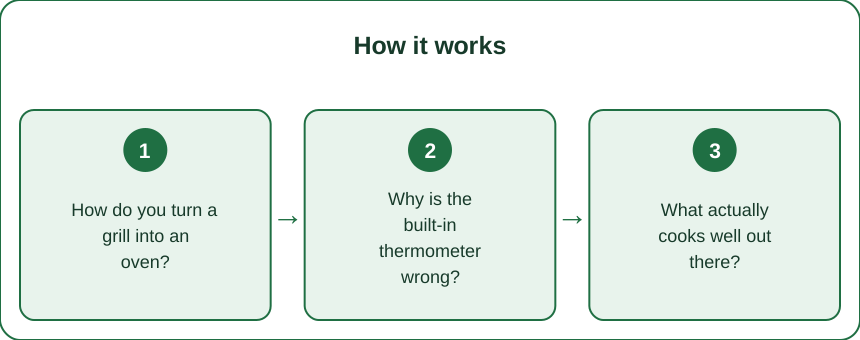
How do you turn a grill into an oven?
One setup change, and it is the whole technique.
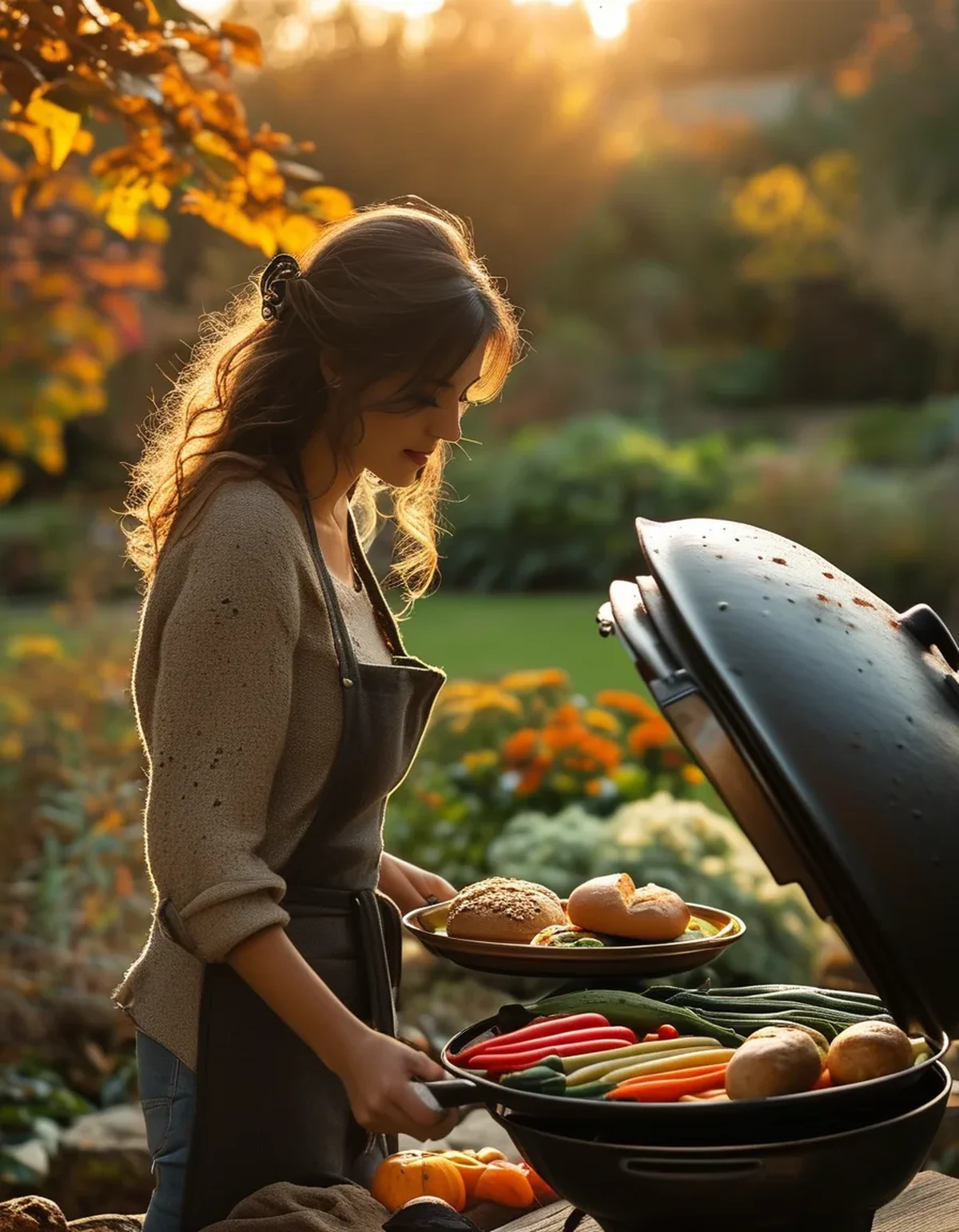
Indirect heat means the food is not over the fire. On a gas grill, light the burners on one side only and put the food on the unlit side. On charcoal, bank all the coals to one half - or to two sides with a gap in the middle - and put the food in the gap.
The lid stays down. This is the part people find hard. A covered grill circulates hot air exactly like a convection oven, and every time you lift the lid you lose most of it. Each peek costs about 5-10 minutes of cooking time.
Target temperature: 175-200C for most roasting. Lower for anything long and slow, higher only for bread and pizza.
Control it with the vents on charcoal, the burner dial on gas. On a kettle grill, the bottom vent controls the fire and the top vent controls the flow. Adjust the bottom vent to change temperature and leave the top mostly open.
Use a drip pan under the food. A foil tray of water under the grate catches fat, prevents flare-ups, and adds a little humidity that stops things drying out. This one detail is what makes grill-roasting behave properly.
Why is the built-in thermometer wrong?
Because of where it is, and it matters more than any other single factor here.
The lid gauge measures the air at the top of the dome, which is not where your food is. It commonly reads 15-25C higher than grate level, and on cheaper grills the gauge itself can be out by another 20C.
Put an oven thermometer on the grate, next to the food, and read that instead. A cheap dial thermometer costs very little and it is the difference between roasting and guessing.
Learn your grill’s hot spots. Every grill has them, and the indirect side is not uniform. The bread test: lay slices of white bread across the whole grate, close the lid for two minutes, and look at the browning pattern. That map is your grill, and it does not change.
Rotate trays halfway. Because there are hot spots, and because the side nearest the fire always runs hotter. A half-turn at the midpoint is the equivalent of the oven rack shuffle everyone already does indoors.
Expect the temperature to drift on charcoal. Fuel burns down over an hour and the temperature falls with it. For anything over 45 minutes, plan to add fuel - and add it at the edges so you are not dropping cold coals into a stable fire.
What actually cooks well out there?
The list is longer than people expect, and some of it is genuinely better than the indoor version.
Root vegetables and squash. Carrots, parsnips, potatoes, whole squash halves. These are the best case - they take a long time, they benefit from a bit of smoke, and they free up an entire oven shelf.
Whole heads of garlic and onions. Wrapped in foil, an hour on the indirect side, and they come out sweet and spreadable.
Flatbreads and pizza. The grill runs hotter than a domestic oven and gives you the char you cannot get indoors. Direct heat for these, briefly, not indirect.
Casseroles and gratins. In a metal or cast iron dish - not glass, which can shatter on a grill grate. They cook exactly as they do indoors, with a faint smokiness that suits most of them.
Whole chickens and large joints. The classic use, and the one that most obviously frees oven capacity when you need it.
Holding cooked food warm. An underrated one. A grill running at 80-90C on the indirect side is a perfect warming drawer, which solves the other half of the gathering problem - everything being ready at different times.
What does not work: delicate baking - cakes, custards, anything soufflé-like - because the temperature is not stable enough. And anything you need to check constantly, because every check costs you heat.
5 Mistakes When Grilling a Full Meal
1. Opening the lid to check. The single biggest one. Every lift costs 5-10 minutes. Use a probe thermometer with a wire lead if you need to monitor something, and otherwise trust the timing.
2. Running out of fuel mid-cook. A full chimney of charcoal gives you roughly 45-60 minutes of useful roasting heat. For anything longer, either start a second batch in a chimney at the 30-minute mark or plan to add unlit briquettes early. Discovering this at the 40-minute mark with a raw chicken is a genuinely bad moment.
3. Forgetting the wind. Wind strips heat from a grill dramatically - on a gusty day a kettle grill can run 30-40C cooler than the same setup on a still one, and charcoal burns through faster because the vents feed it more air. Position the grill with a windbreak and expect longer times.
4. Using glass dishes. Thermal shock on a grill grate is a real risk. Metal, cast iron, foil trays, or ceramic rated for direct heat.
5. Not planning the sequence. The grill can only do one temperature at a time. Work out the order before you light it: high-heat items first or last depending on the fuel, long roasting in the middle, and use the falling heat at the end for warming and holding. This is the actual skill, and it is the same skill as running an oven on a busy day.
What changes now that the weather is turning?
Several things, and they all point the same direction: everything takes longer.
Ambient temperature affects the grill directly. A grill that holds 190C easily on a 28C August afternoon will struggle on a 10C October evening. Expect to use more fuel and allow more time - typically 15-20% longer once the air drops below about 12C.
Wind matters more in autumn than heat does, as above. A sheltered position is worth more than an extra chimney of coals.
Preheat for longer. The metal of the grill itself has to come up to temperature, and cold metal absorbs a lot of heat before it starts giving any back. Add ten minutes to your preheat once the weather turns.
Darkness is the practical constraint. From now, the evenings are shortening by roughly fifteen minutes a week, and by October you will be grilling in the dark. Sort out a light before you need one - a head torch is genuinely the best option because it points where you are looking.
The upside: autumn is the best grilling season. The food that suits grill-roasting - squash, root vegetables, whole birds, slow joints - is exactly what is in season now. And the gatherings that overload an oven are all in the next four months. The grill is more useful from September to December than it is in July.
FAQ: Grilling a Full Meal, Answered
Can I really bake bread on a grill?
Yes, and flatbreads and pizza are better than the indoor version because of the higher heat. Enriched loaves and anything needing a precise long bake are harder - possible, but you will fight the temperature.
Do I need a pizza stone or a cast iron pan?
A cast iron pan or a heavy baking steel helps enormously - it evens out the hot spots and stores heat. It is the single best accessory for grill-as-oven cooking.
How do I keep things warm without drying them out?
Low indirect heat, covered with foil, and a tray of water underneath. 80-90C holds food safely and comfortably for an hour or more.
Gas or charcoal for this?
Gas is far easier for temperature control and is the better choice for a full meal with several components. Charcoal tastes better and is more work. For a busy gathering, gas.
Is the smoke flavour too strong for side dishes?
On indirect heat with the lid down it is mild - noticeably present, not overwhelming. If you want less, use fewer coals and no wood. If you want more, one small chunk of wood is plenty for a whole cook.
TL;DR:
- A covered grill with the heat on one side is a convection oven, and it doubles your capacity for free.
- 175-200C measured at the grate, not on the lid gauge, which reads 15-25C high.
- Keep the lid down. Every peek costs 5-10 minutes.
- Best out there: root vegetables, squash, whole garlic, flatbreads, casseroles, whole birds - and holding food warm at 80-90C.
- Plan the sequence before lighting; the grill does one temperature at a time.
- Cold weather and wind mean more fuel, longer preheat, and 15-20% longer cooking.
The irony is that the grill becomes most useful exactly when people put it away. Autumn produce suits it, autumn gatherings overload the oven, and the only real obstacle is standing outside in a jacket.
Keep Reading
This article is for general informational purposes only and is not medical advice. Always consult a qualified health professional for guidance specific to you.