Why Charcoal Takes Longer to Light Once the Humidity Drops
Quick Answer: Cooler autumn air does not make charcoal harder to ignite - damp charcoal does. Bags stored outside absorb humidity all summer, and lump charcoal is porous enough to hold a surprising amount. Cold air also pulls heat away from the grill faster, which extends the time from lit to cooking-ready by around 5 to 10 minutes and raises fuel consumption by roughly 25% on a cold night. Store charcoal indoors and dry, and light 15 minutes earlier than you did in July.
The first cool-evening cook of the season is often the one where everything takes twenty minutes longer than expected and the food goes on late.
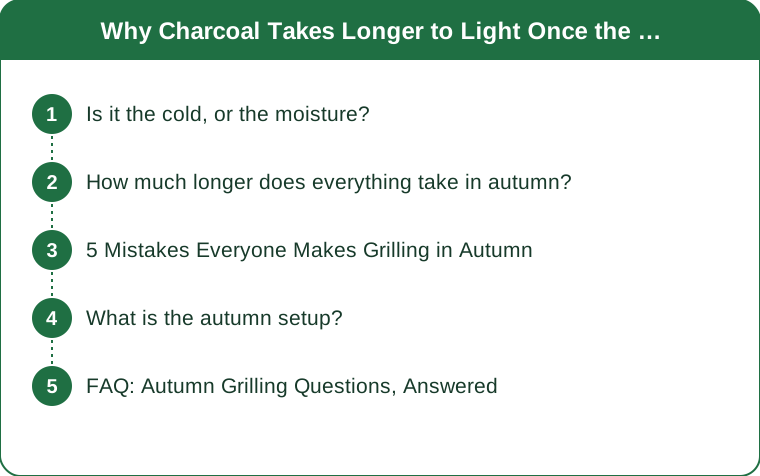
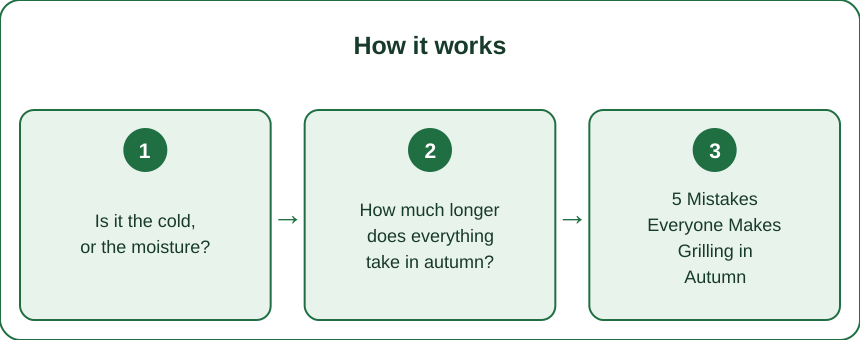
Is it the cold, or the moisture?
Moisture, overwhelmingly. Cold affects the cook; damp affects the light.
Charcoal is porous and hygroscopic. It absorbs atmospheric moisture, and a bag left open in a shed through a humid summer can hold enough water to noticeably slow ignition. The water has to boil off before the charcoal reaches ignition temperature, which is where the extra time goes.
Lump charcoal absorbs more than briquettes. Its open structure and larger surface area take up more moisture. Briquettes are compressed and often contain binders, which makes them somewhat more resistant - one of the few practical advantages they have.
Cold air itself has little effect on ignition. Charcoal ignites at a few hundred degrees; ambient air at 10°C versus 25°C makes a marginal difference to reaching that point.
But cold air affects everything after ignition. Once lit, the grill loses heat to the surrounding air faster, so it takes longer to come up to temperature and burns more fuel to stay there.
Quick test: damp charcoal often feels slightly cool to the touch, may look dull rather than matte black, and produces more visible white smoke and hissing in the first minutes. Dry charcoal lights with a clean, quiet ignition.
How much longer does everything take in autumn?
Enough to plan around, and the numbers are reasonably consistent.
Chimney starter time increases by roughly 5 minutes in cool conditions with dry fuel - and by 10 to 15 with damp fuel.
Preheating the grill takes 5 to 10 minutes longer. Metal loses heat to cold air, and the grill body itself has to come up to temperature before the cooking surface stabilizes.
Fuel consumption rises around 25% on a genuinely cold evening. More heat is lost to the environment, so more fuel is burned to maintain the same cooking temperature. Long low-and-slow cooks are affected most.
Wind matters more than temperature. A 15 km/h wind strips heat from a grill faster than a still night 10 degrees colder. Positioning the grill out of the wind is the highest-value adjustment on an autumn evening.
And food takes longer too. Ingredients stored in a cooler garage or fridge start colder relative to a warm summer kitchen, which adds time to the cook itself. Bringing meat out 30 minutes earlier is a reasonable habit as the season turns.
5 Mistakes Everyone Makes Grilling in Autumn
1. Storing charcoal outside. A shed, a garage, or a covered patio is not dry storage in autumn. Charcoal belongs in a sealed container indoors, or at minimum in a closed bin with a tight lid. This one change fixes most lighting problems.
2. Opening the lid to check. Every lid lift costs heat, and in cold weather recovery is much slower than in summer. Use a thermometer, and open deliberately rather than out of habit.
3. Not accounting for wind. Set the grill behind a wall, a fence, or any windbreak. Also check that the vents are not facing into the wind, which turns the airflow control into a wind tunnel.
4. Using the same fuel quantity as summer. A cold-weather cook needs more charcoal for the same result, and running out mid-cook is a much bigger problem than starting with extra. Add roughly a quarter more than your summer amount.
5. Cooking in the dark without planning for it. Sunset moves fast in September and October - it is genuinely the most common autumn grilling problem after fuel. A headlamp or a clip light, and a probe thermometer you can read, prevents a lot of guesswork about doneness.
What is the autumn setup?
Six adjustments that between them recover most of the lost time and fuel.
Store charcoal indoors in a sealed container. Non-negotiable and free.
Light 15 minutes earlier than you think. Build the buffer into the plan rather than discovering it. If the food is ready before the grill, that is a better problem than the reverse.
Use a chimney starter, not lighter fluid. Chimneys are faster, more reliable in cold conditions, and do not introduce fuel taste. In damp conditions, two sheets of paper rather than one and a slightly longer wait is the adjustment.
Add 25% more fuel. Both for temperature stability and because a cold grill takes longer to recover after the lid opens.
Preheat with the lid down. Getting the body of the grill hot, not just the coals, is what stabilizes cooking temperature. This step is skippable in summer and is not in October.
Consider a two-zone setup. Coals banked on one side gives you a hot zone and a safe zone, which matters more when heat is fluctuating with wind and cold air.
And bring the food out early. Thirty minutes on the counter takes the fridge chill off and removes one variable from a cook that already has more of them than a summer one did.
FAQ: Autumn Grilling Questions, Answered
Can damp charcoal be dried out and used?
Yes. Spread it on a tray somewhere warm and dry for a day or two, or leave the bag open in a heated room. It will light normally afterward, though badly saturated charcoal may crumble.
Are briquettes better than lump in cold weather?
Briquettes burn more consistently and for longer at a steady temperature, which suits cold-weather cooking and long cooks. Lump burns hotter and faster and is preferable for high-heat searing. Neither is wrong; they suit different jobs.
Do I need a grill cover?
It keeps the grill dry and prevents rust, which matters much more once autumn rain starts. It does not insulate meaningfully during a cook, so it is a storage measure rather than a performance one.
How cold is too cold to grill?
There is no real limit - people grill in freezing conditions routinely. What changes is fuel use, preheat time, and how quickly the grill recovers after opening. Plan for all three and the cooking itself is unchanged.
TL;DR:
- Slow ignition is usually damp charcoal, not cold air - lump absorbs more moisture than briquettes.
- Cold and wind extend preheat by 5 to 10 minutes and raise fuel use by around 25%.
- Store charcoal indoors sealed, light 15 minutes early, add a quarter more fuel, and preheat with the lid down.
- Wind matters more than temperature - position the grill behind a windbreak and keep vents out of the airflow.
What makes autumn grilling worth the adjustments is that it is genuinely the best season for it - cooler evenings, better appetite for slow-cooked food, and none of the summer crowding around the patio. The only thing standing between that and a frustrating evening is a dry bag of charcoal and a fifteen-minute head start.
Keep Reading
This article is for general informational purposes only and is not medical advice. Always consult a qualified health professional for guidance specific to you.