How to Grill Without Charring: The Temperature Trick Most People Skip
Quick Answer: Charring without properly cooking the inside almost always comes from grilling everything over direct high heat. Setting up a two-zone fire — direct high heat for searing, indirect lower heat for finishing — fixes it for nearly everything you grill.
Most home grillers only ever use one heat zone, which forces an impossible choice between undercooked centers and blackened exteriors. A second zone solves both at once.

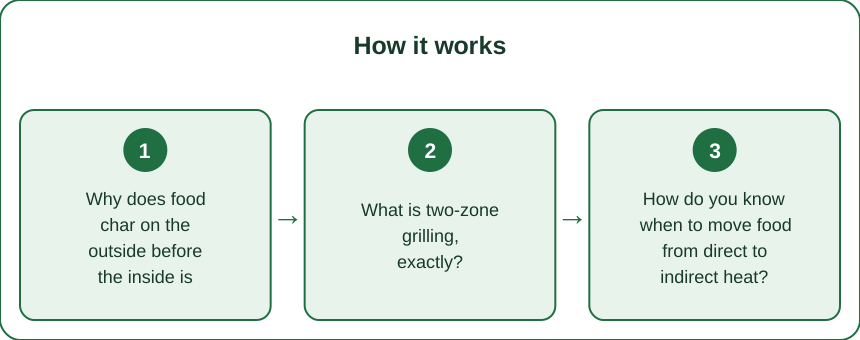
Why does food char on the outside before the inside is done?
Because direct heat cooks the surface far faster than heat can conduct to the center — especially on thicker cuts like chicken breasts or bone-in pieces. Left over direct high heat the whole time, the outside reaches char temperature well before the inside reaches safe or desired doneness.
The fix isn’t lower heat everywhere — it’s using high heat only where you need a sear, and moving food to gentler heat to finish.
What is two-zone grilling, exactly?
Arrange coals (or burners, for gas) so one side is direct high heat and the other is indirect, lower heat — for gas grills, this simply means leaving one or more burners off. Sear food over the hot direct zone for color and grill marks, then move it to the indirect zone to finish cooking through without additional charring.
This single setup change fixes the charred-outside-raw-inside problem for the large majority of home grilling mistakes.

How do you know when to move food from direct to indirect heat?
As a rule of thumb: sear for 2-4 minutes per side over direct heat until you have color and grill marks, then move to indirect heat and finish based on internal temperature — 165°F for chicken, 145°F for pork, and your preferred doneness temperature for steak.
An instant-read thermometer removes the guesswork entirely and is the single most useful $15 tool for avoiding both charring and undercooking.
5 Mistakes That Cause Charring
1. One-zone-only setup — no escape route from high heat once the outside is done.
2. Grilling straight from the fridge — cold centers need much longer over heat, giving the outside more time to char.
3. Sugary marinades over direct high heat — sugar burns fast; move marinated food to indirect heat sooner.
4. Flipping too infrequently — one side gets far more exposure time than the other.
5. Skipping a thermometer — guessing doneness by time alone leads to either charring (overcompensating) or undercooking.
FAQ: Grilling Without Charring, Answered
Does this two-zone method work on a small apartment-size grill?
Yes — even a compact grill can have a hotter and cooler side; just cluster coals or keep one burner lower rather than spreading heat evenly.
What temperature should the indirect zone be?
Roughly 300-350°F is a good finishing range for most proteins and vegetables.
Does letting meat rest at room temp before grilling help too?
Yes — 20-30 minutes out of the fridge lets the center start closer to cooking temperature, reducing total grill time and char risk.
TL;DR:
- Charring usually means direct high heat cooked the outside faster than the inside finished
- Set up two zones: direct heat to sear, indirect heat to finish
- Sear 2-4 minutes per side, then move and finish by internal temperature, not guesswork
- A $15 instant-read thermometer solves most charring and undercooking mistakes at once
Next cookout, split your grill into two zones before you start — it’s the single highest-impact change you can make.
Keep Reading
This article is for general informational purposes only and is not medical advice. Always consult a qualified health professional for guidance specific to you.