Marinade Science: What Actually Penetrates and What Just Coats
Marinade folklore promises flavor ‘infused to the bone’ — while food science measures penetration in millimeters. The honest marinade guide: what actually gets in, the acid-and-time equations that help or harm and the formulas that maximize the surface where flavor really lives.

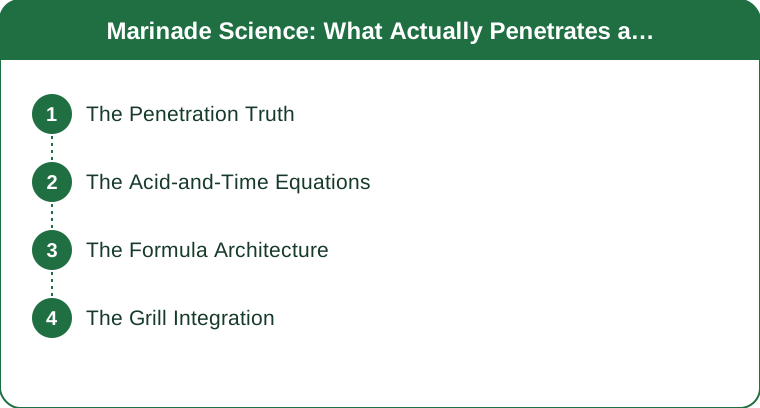
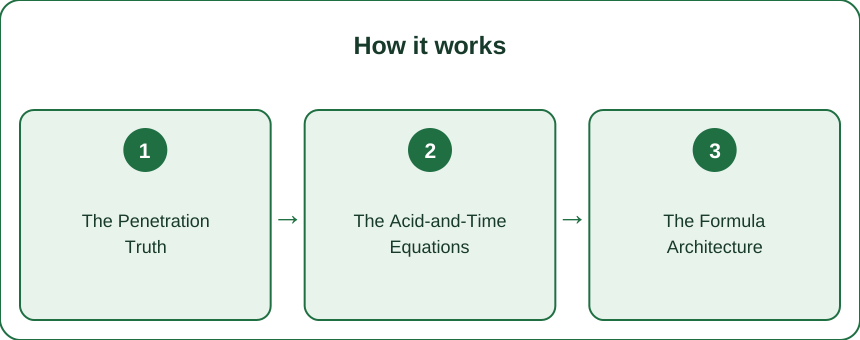
The Penetration Truth
What marinades actually do: the depth honesty (most flavor molecules penetrate 1-3 millimeters — the marinade is a SURFACE treatment; the 24-hour soak flavors barely deeper than the 2-hour one), the salt exception (salt genuinely travels — the brine effect that seasons deeper and helps proteins hold moisture; the marinade’s salt is doing the interior work while everything else decorates the outside), the surface-area corollary (since flavor lives at the surface, MORE surface wins — the thin cuts, the scored flesh and the smaller pieces that marinades actually transform; the thick roast shrugging off its soak was never the marinade’s fault), and the reframe (marinades are surface-flavor plus salt-brine plus browning-assist — judged by that honest job description, they’re excellent).
The Acid-and-Time Equations
The variables that matter: the acid double-edge (citrus and vinegar tenderize the surface briefly then MUSH it — the ceviche-textured chicken of the overnight citrus marinade; acid marinades run 30 minutes to 2 hours, not overnight), the yogurt-and-buttermilk exception (dairy’s gentler acids tenderize kindly over longer windows — the tandoori-and-fried-chicken traditions built on exactly this; the overnight marinade that actually improves), the enzyme warning (pineapple, papaya and kiwi carry protein-dissolving enzymes — the mush machines that turn surfaces to paste; cooked-or-brief only), the oil’s role (the flavor-carrier and stick-preventer — fat ferries the aromatics and buys grill release), and the time table (fish 15-30 minutes, chicken 2-12 hours acid-depending, sturdy cuts up to 24 with gentle marinades — the longer-is-better folklore retired by texture).

The Formula Architecture
Building marinades that work: the ratio skeleton (3 parts oil : 1 part acid : salt-and-aromatics to conviction — the classic proportion that balances), the flavor-family formulas (the soy-ginger-garlic-sesame direction, the yogurt-spice tandoori-adjacent, the citrus-herb-chili summer tier, the balsamic-rosemary sturdy-cut classic — four formulas covering the grill’s whole season), the sugar note (honey-and-sugar marinades brown beautifully and burn readily — the medium-heat and watch-it discipline; the char that’s flavor versus the char that’s carbon), and the safety basics (marinate cold, never reuse raw-meat marinade unboiled, and the reserve-some-before rule — the clean baste set aside at mixing solves it all).
The Grill Integration
Marinades at the fire: the pat-dry paradox (the marinated surface patted before grilling browns better — the dripping-wet protein steams; the flavor stayed, the water goes), the baste timing (the reserved marinade brushed in the final minutes — the fresh flavor layer that raw-contaminated brushes can’t safely add), the post-grill finisher (the reserved portion as a drizzle at serving — the brightest version of the marinade’s flavor, never having met the heat), and the marinade-vs-rub honesty (dry rubs win crust, marinades win moisture-and-tang — the two tools for different results; the salt-ahead-plus-rub approach out-crusts any wet soak; the grill kitchen carries both). Surface flavored, salt inside, texture protected: marinades doing their actual job, brilliantly.
Millimeters not bones, salt travels alone, acid brief or dairy long, pat dry to brown. Marinade science trades the folklore for better results — surface mastery beats mythical depth.
Keep Reading
This article is for general informational purposes only and is not medical advice. Always consult a qualified health professional for guidance specific to you.