How to Keep Grilling Once the Evenings Get Dark and Cold
Quick Answer: Cold air and wind pull heat out of a grill faster, so expect longer preheats, higher fuel consumption, and cooking times that run longer than your summer instincts suggest - use a thermometer rather than time. Add a light source you can position, keep the lid closed far more than you would in summer, and move the whole operation somewhere sheltered from wind, which affects temperature more than air temperature does.
The grill is not a summer appliance. It became one because nobody wants to stand in the dark in a coat poking at something they cannot see, and all three of those problems have straightforward fixes.
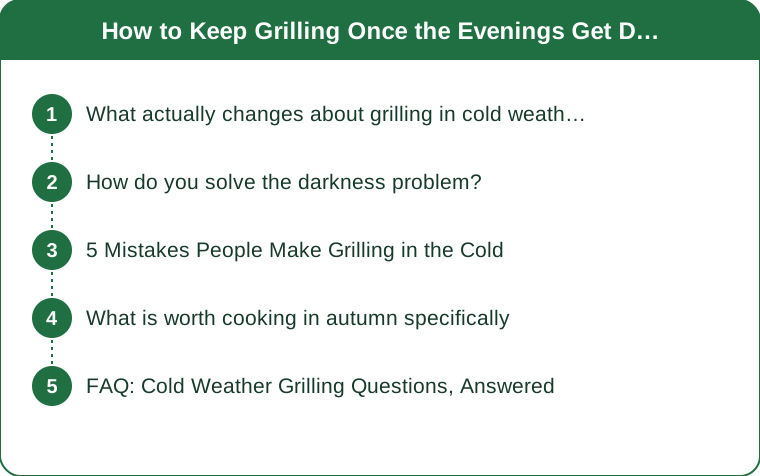
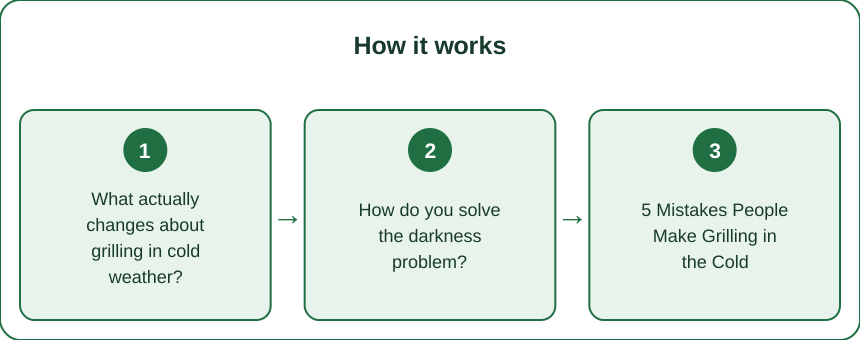
What actually changes about grilling in cold weather?
Physics, mostly, and it works against you in three ways.
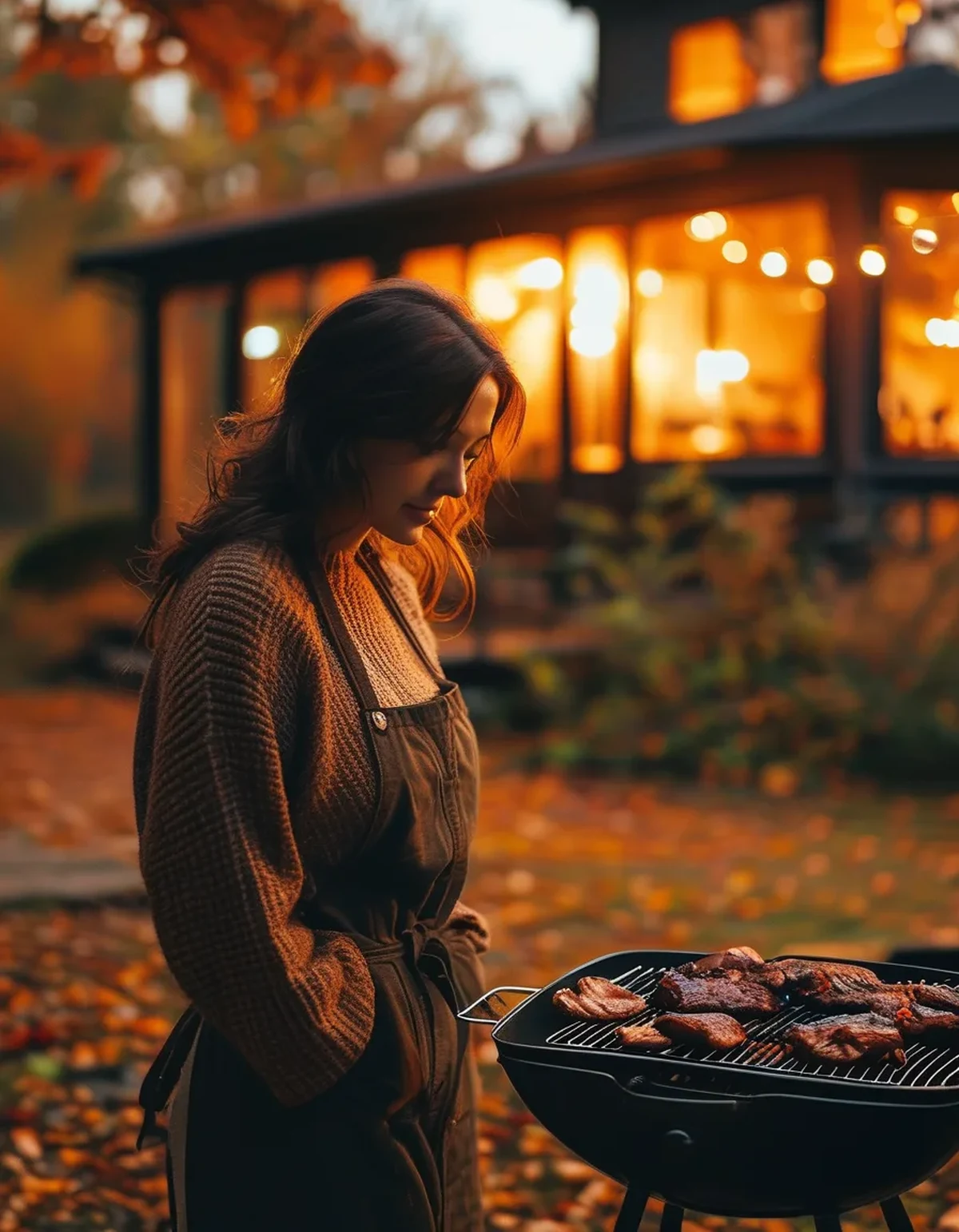
Heat loss increases substantially. A grill is a thin metal box radiating heat into the surrounding air, and the rate of that loss depends on the temperature difference. In 5°C air, a grill loses heat considerably faster than in 25°C air, which means more fuel to reach temperature and more fuel to hold it.
Wind is the bigger factor and it is consistently underestimated. Moving air strips heat from the grill body far faster than still cold air does, and a gas grill in a stiff breeze can struggle to reach temperature at all. Sheltering the grill from wind does more for cold-weather performance than anything else you can do.
Preheat takes much longer. A grill that reached temperature in ten minutes in July may take twenty or more in October. Cooking on an under-heated grill is the leading cause of autumn food sticking to the grates and cooking unevenly.
Opening the lid costs far more. In summer, lifting the lid loses some heat and it recovers quickly. In cold and wind, the same lift can drop the internal temperature dramatically and take several minutes to recover. The single biggest technique change for autumn is simply opening the lid less.
And the food itself starts colder. Ingredients taken from a fridge into a cold kitchen and out to a cold grill are colder throughout than the same items in summer, so cooking times run longer for that reason too.
Gas grills face one specific issue: propane tank pressure falls as temperature drops, which can reduce output in genuinely cold conditions. Keeping the tank as full as practical helps, since a fuller tank sustains pressure better.
What actually improves in autumn: cooler ambient temperature makes it easier to maintain low-and-slow cooking without the grill creeping upward, and the food you want to cook in autumn - larger cuts, roasts, root vegetables - suits that style well.
How do you solve the darkness problem?
Deliberately, because this is what stops most people rather than the cold.
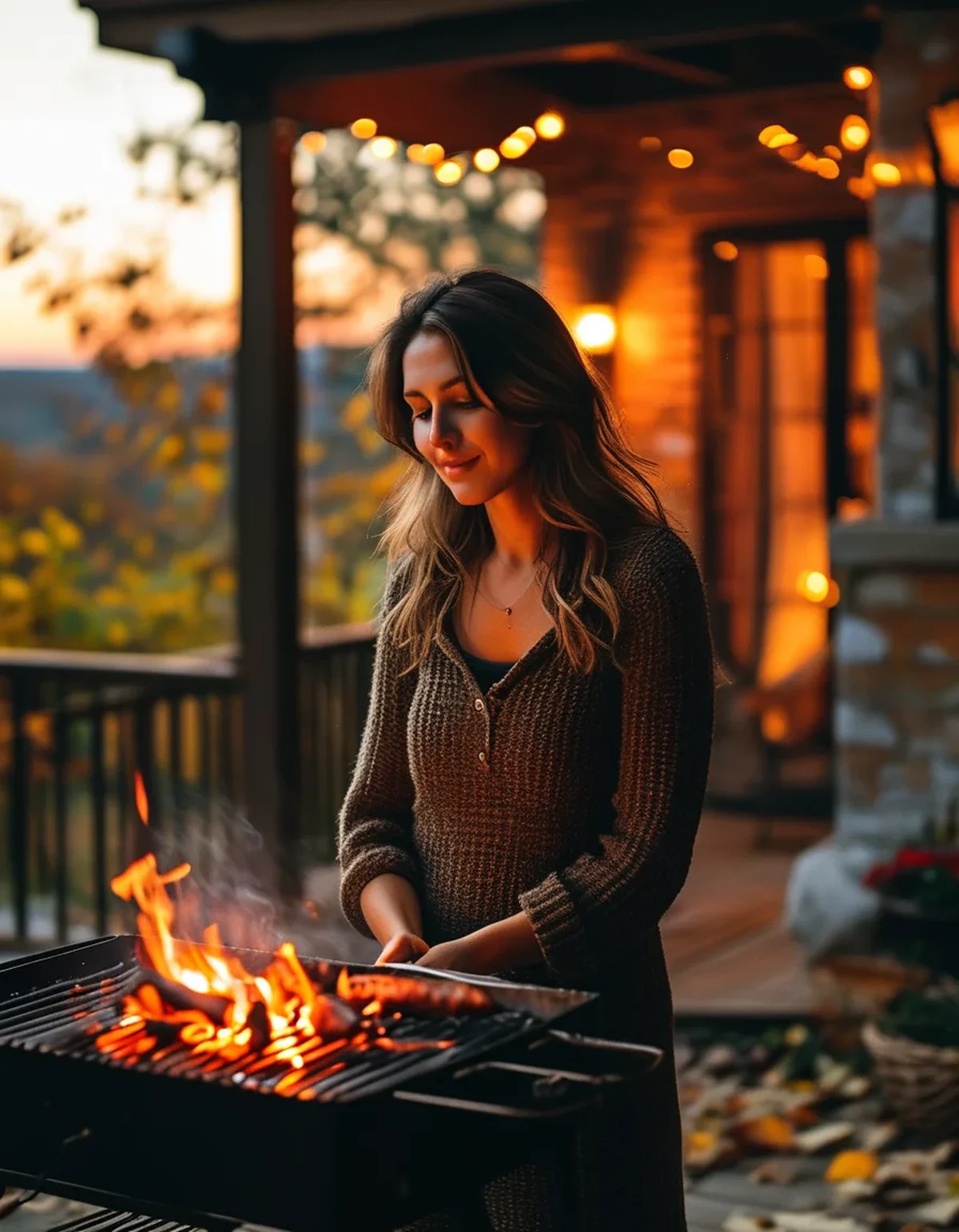
Get a light you can aim, not an overhead one. A clip-on grill light or a headtorch gives you light where you are looking. Overhead patio lighting creates shadows exactly where you need to see, which is on the grate directly in front of you.
A headtorch is genuinely the best answer and slightly undignified, which is why people resist it. It puts light precisely where your eyes are pointed and leaves both hands free.
Light the prep area separately from the grill area. Carrying raw and cooked food between a dark kitchen and a dark patio is where accidents happen. One light on the table, one on the grill.
Rely on the thermometer, not on looking. This is the real solution to darkness. Judging doneness by colour and appearance is unreliable in poor light, and an instant-read thermometer removes the need entirely. A leave-in probe thermometer with a remote display is even better - you can monitor a roast from indoors.
Which leads to the autumn technique shift generally: cook to temperature, not to time or appearance. That is better practice year round, and in autumn it becomes necessary rather than optional.
Prepare everything before you go outside. Trips back to the kitchen in the dark and cold are what turn a pleasant cook into a chore. Tray everything - food, tools, thermometer, plates - and make one trip.
And check your safety basics in the dark. A grill you cannot see clearly is a grill whose flame status and fuel connections you cannot check by glance. Do that check with good light before you start, in daylight if possible.
5 Mistakes People Make Grilling in the Cold
1. Not preheating long enough. The most common one by far. An under-heated grate means food sticks, sears poorly, and cooks unevenly, and everyone blames the food. Give it twice the preheat time you would in July and confirm with the built-in gauge or a grate-level thermometer.
2. Opening the lid out of habit. Every lift costs several minutes of recovery in cold and wind. Summer grilling tolerates constant checking; autumn grilling does not. Set a plan, use a thermometer, and open the lid only when there is a reason.
3. Grilling somewhere exposed. People position a grill for summer convenience and never reconsider. Moving it to a sheltered spot - against a wall, out of the prevailing wind, but always with proper clearance from the building and never under an overhang or in an enclosed space - transforms cold-weather performance.
4. Trusting summer timings. Cold air, colder food, and more lid-opening all extend cooking times, sometimes considerably. Timings from a summer recipe are guidance at best. Cook to internal temperature.
5. Letting the grill go cold and dirty between uses. Autumn moisture plus cooking residue equals corrosion, and grates deteriorate fast over a wet season. Burn off and brush after each cook while the grill is still hot, and keep it covered when not in use - a cover that fits properly is worth having.
And the safety one that matters more in autumn: never bring a grill into an enclosed space to escape the weather. Charcoal and gas grills produce carbon monoxide, which is odourless and can be lethal indoors, in a garage, or under a closed canopy. Every winter this causes deaths, and the reasoning is always that it was just for a few minutes. Grill outdoors with proper overhead clearance, or do not grill.
What is worth cooking in autumn specifically
The season changes what suits the grill, and mostly for the better.
Larger cuts come into their own. Cooler ambient temperatures make it easier to hold a low steady heat for a long cook, which is exactly what a pork shoulder, brisket, or whole chicken wants. Summer’s ambient heat makes low-and-slow harder to control, not easier.
Root vegetables and squash grill beautifully and are in season. Halved squash cut-side down, thick-cut roots, and whole onions all take well to indirect heat and are far more interesting than the summer default of peppers and courgettes.
Apples and pears on the grill are a genuinely good autumn dessert and take almost no effort - halved, cut side down over moderate heat until they caramelise.
Anything you would roast, you can grill. A grill with the lid down and indirect heat is an oven with wood or charcoal flavour, and autumn is roasting season. This is the mental shift that keeps a grill in use through winter.
Smoke works better in cold weather in one practical respect: smoke adheres more readily to cool, moist meat surfaces, so the early phase of a cold-weather cook takes on smoke flavour efficiently.
Two-zone setup is the autumn default. A hot zone and an indirect zone gives you the flexibility to sear and then finish gently, and it lets you park food away from direct heat while you deal with something else - useful when everything takes longer than expected.
And keep a warming plan. Food goes cold on the plate remarkably fast in a 6°C evening. Warmed plates, serving indoors rather than outdoors, and resting meat somewhere insulated rather than on a cold worktop all make the difference between a good autumn cook and a disappointing one at the table.
FAQ: Cold Weather Grilling Questions, Answered
Does food take longer to grill in cold weather?
Yes, often considerably. The grill loses heat faster to cold air and wind, food starts colder, and every lid opening costs more recovery time. Treat summer timings as unreliable and cook to internal temperature with a thermometer instead.
Why won’t my gas grill get hot enough in autumn?
Usually wind rather than air temperature - moving air strips heat from the grill body far faster than still cold air. Move it somewhere sheltered, keeping proper clearance from walls and nothing overhead. Propane pressure also drops as temperature falls, so a fuller tank sustains output better than a nearly empty one.
Can I put my grill in the garage when it rains?
No. Both charcoal and gas grills produce carbon monoxide, which is odourless and can be fatal in an enclosed space - a garage counts as enclosed even with the door open. Grill outdoors with clear space overhead, or cook indoors on the hob instead.
How do I see what I am doing when it gets dark early?
A headtorch is the most effective answer because it puts light exactly where you are looking and leaves your hands free. Beyond that, rely on an instant-read or leave-in probe thermometer rather than visual judgement, since colour and appearance are unreliable guides in poor light anyway.
What is worth cooking on a grill in autumn?
Larger cuts and anything you would otherwise roast - cooler ambient temperature makes holding a low steady heat easier than in summer. Squash, whole onions, thick-cut root vegetables, and halved apples or pears all grill well and suit the season better than the summer vegetable default.
TL;DR:
- Cold and especially wind pull heat from the grill fast - shelter it and double the preheat time.
- Open the lid far less than in summer; each lift costs minutes of recovery.
- Cook to internal temperature, not time or appearance - which also solves the darkness problem.
- A headtorch beats patio lighting, and a leave-in probe lets you watch a roast from indoors.
- Never move a grill into a garage or enclosed space. Carbon monoxide is odourless and it kills.
Autumn grilling is better grilling - low and slow gets easier, and the food that suits it is exactly what is in season.
Keep Reading
This article is for general informational purposes only and is not medical advice. Always consult a qualified health professional for guidance specific to you.