Grilling When It Is 10C Out: What Actually Changes
Quick Answer: Cold air pulls heat out of a grill continuously, which means longer preheats, higher fuel consumption, and much slower temperature recovery after opening the lid. Expect roughly 20 to 30 percent more fuel and 1.5 times the preheat time at 10C compared with 25C. The single biggest change in technique is opening the lid far less - each opening now costs several minutes rather than one.
Cooking times themselves barely change if you hold grill temperature; it is getting and keeping that temperature that gets harder.
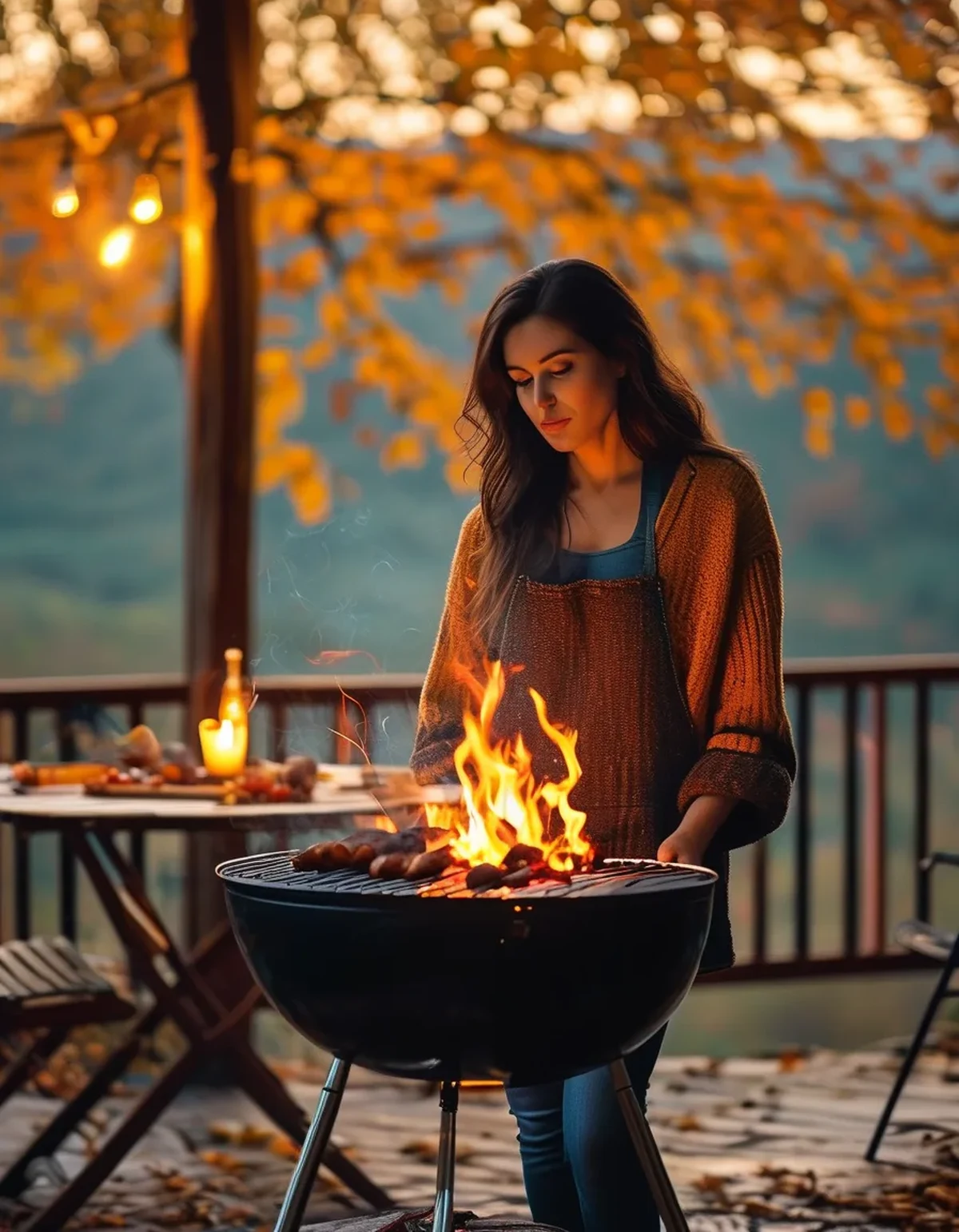
Why does the grill behave so differently in cool weather?
Because heat loss to the surroundings scales with the temperature difference, and that difference just grew.
The physics in one sentence. The rate a grill loses heat is proportional to the gap between grill temperature and air temperature. Going from a 25C day to a 10C day increases that gap, and a grill at 200C now loses heat noticeably faster than it did.
Add wind, which is the bigger factor most people ignore. Convective heat loss rises sharply with air movement. A 20km/h wind can increase heat loss substantially, and wind hitting a gas grill’s burner area can affect combustion directly - not just cooling the outside but disturbing the flame.
What this produces in practice:
- Preheat takes 1.5 to 2 times as long. A grill that reached temperature in 10 minutes now takes 15 to 20
- Fuel consumption rises 20 to 30 percent for the same cook
- Temperature recovery after opening the lid takes far longer - potentially 5 minutes rather than 1
- Temperature holds less steadily, cycling more as the burners or coals fight the loss
Charcoal versus gas in the cold:
- Charcoal is less affected once established, because the fuel mass itself holds heat. Lighting takes longer, but a full chimney of lit coals is a substantial thermal reservoir
- Gas is affected more, particularly propane. Propane vaporisation slows as the tank cools, and below about -5C output drops noticeably. A partly empty tank in cold weather can fail to deliver full heat
- Ceramic and kamado grills barely notice, because thick insulated walls are exactly the solution to this problem
The measurement point that matters. The lid thermometer is less reliable in cold weather because it reads air near the lid, which is where the cold outside surface has most influence. A probe at grate level tells you the actual cooking temperature, and in cold weather the two can differ by 15 to 25C.
How should you change your technique?
Open the lid less, plan longer, and let the grill do more of the work indirectly.
The lid discipline rule, which is the biggest single change.
- In summer, opening the lid costs perhaps a minute of recovery. In cold weather it can cost five
- Every check has a real price now. Three unnecessary checks can add fifteen minutes
- Use a leave-in probe thermometer rather than opening to check. This is the highest-value equipment purchase for cold-weather grilling
- Prep everything before you start so the lid stays down
Timing adjustments:
- Preheat for 15 to 20 minutes rather than 10, and verify with a grate-level reading
- Add 10 to 15 minutes to any planned indirect cook, though direct-heat cooking times are largely unchanged if grate temperature holds
- Rest meat indoors, not on the counter outside. A steak resting in 10C air loses internal temperature fast and can drop 5 to 8C in ten minutes, which ruins the point of resting
Fuel management:
- Charcoal: use roughly 25 percent more than a summer cook, and light it earlier
- Charcoal: use a chimney starter, which is faster and far more reliable in cold and wind than lighter fluid
- Gas: check the tank level before starting. A tank below a quarter full may not vaporise fast enough in cold weather to maintain high heat
- Gas: keep the tank out of the wind, since a cold tank is a low-output tank
Wind management, which is worth more than it sounds:
- Position the grill so wind hits the side, not the vents or burner intake
- A windbreak - a wall, a fence, a screen - can be the difference between reaching temperature and not
- Never move a grill indoors, into a garage, or under a closed awning. Carbon monoxide from charcoal is lethal and odourless, and this genuinely kills people every year. Grills stay outdoors, in open air, always
The two-zone setup becomes more valuable, not less. A hot zone and a cooler zone gives you a place to move food when the outside temperature is fighting you, and the indirect side stays more stable than trying to hold one moderate temperature across the whole grill.
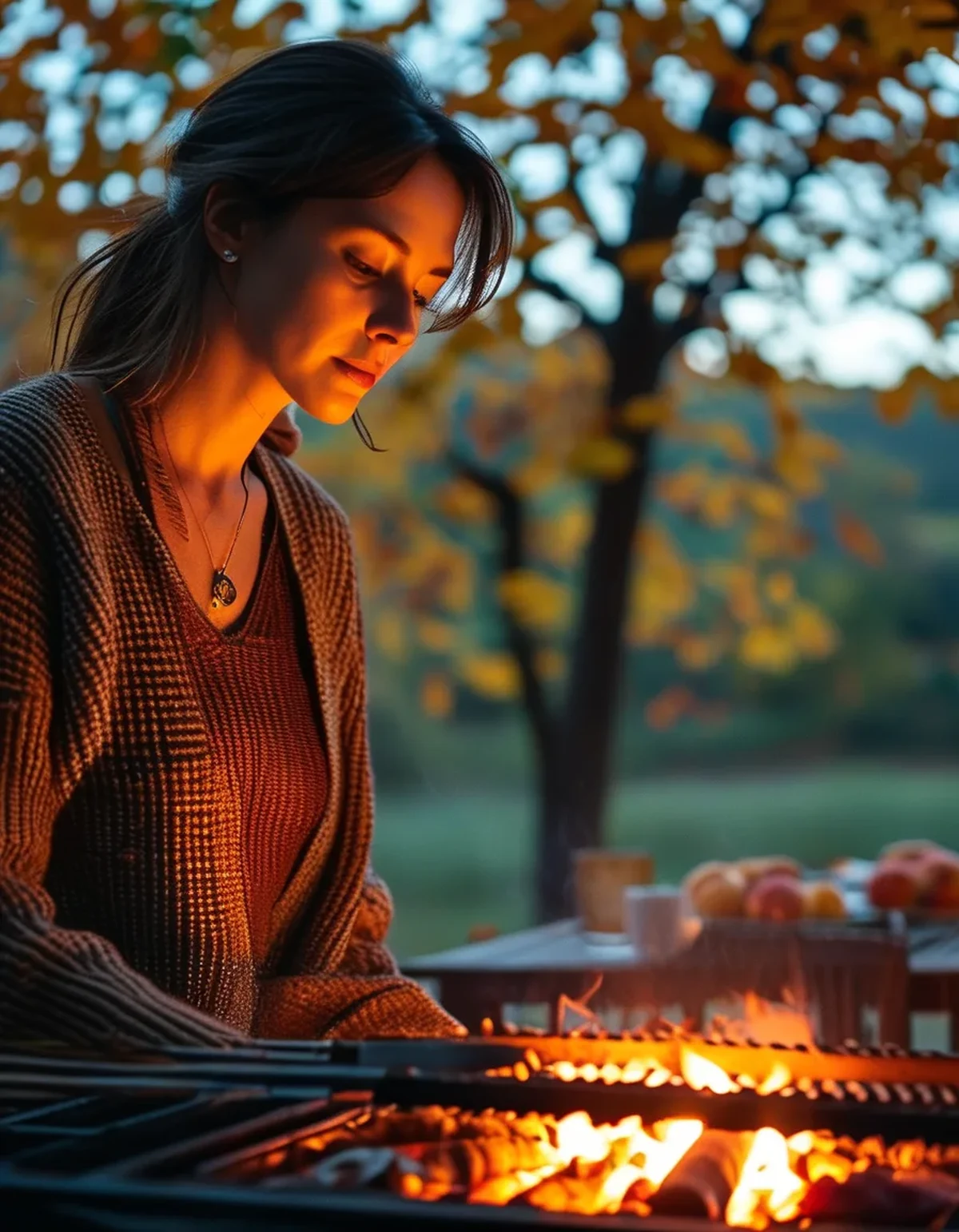
What is worth cooking in cool weather, and what is not?
Cool weather favours long cooks and disfavours anything needing precise quick heat.
What works particularly well now:
- Larger cuts cooked indirectly - pork shoulder, brisket, whole chicken. The long cook time absorbs the slower recovery, and the grill settles into a stable state
- Reverse-seared steaks, where the long low phase is forgiving and the final sear is brief
- Root vegetables and squash, which suit longer cooking and are at their seasonal best
- Anything you would use the oven for. A covered grill in autumn is essentially an outdoor oven and it is a genuinely good one
- Smoking, which is arguably better in cool weather - smoke adheres more readily to cool, moist meat surfaces, and the ambient air helps keep the surface cool longer
What becomes harder:
- Thin, quick-cooking items - fish fillets, thin steaks, prawns. The margin for error shrinks because the grill recovers so slowly after each lid opening
- Anything needing rapid high heat, since reaching and holding 250C plus is much harder
- Delicate items over direct heat, where temperature swings are more likely to overcook or stick
The two-zone approach solves most of this:
- Sear over the hot zone with the lid down for a short burst
- Move to the indirect side to finish, where the temperature is more stable
- This handles the recovery problem by never asking the hot zone to do a long job
Practical safety and comfort details:
- Light the grill in daylight if you can. Autumn evenings arrive fast, and grill lighting is the most useful piece of equipment nobody buys
- Wear proper gloves rather than warm gloves. A woolly glove near a grill is a burn risk
- Keep the food journey short. A plate of food crossing a cold garden loses heat quickly - warm the plates and serve immediately
- Clear a path if there is any frost. Carrying hot food on a slippery path is the actual most likely injury of the season
5 Mistakes That Ruin Cool Weather Grilling
1. Opening the lid as often as you did in summer. Each opening now costs several minutes of recovery instead of one. Use a leave-in probe thermometer and treat the lid as something you open twice, not eight times.
2. Trusting the lid thermometer. In cold weather it can read 15 to 25C off from actual grate temperature, because the cold outside surface influences it. Measure at grate level if you care about the number.
3. Starting with a nearly empty propane tank. Propane vaporisation slows as the tank cools, and a low tank in cold air may not deliver full heat at all. Check the level before you light it, not when the burgers are on.
4. Resting meat outdoors. A steak resting in 10C air can lose 5 to 8C internally in ten minutes, which defeats the purpose entirely. Rest indoors, loosely covered, on a warm plate.
5. Moving the grill somewhere sheltered. A garage, a porch, or under a closed awning. Carbon monoxide from charcoal is odourless and lethal, and this is the one mistake on this list that is genuinely dangerous rather than merely annoying. Grills stay in open air, without exception.
Four of these cost you a worse dinner. The fifth can cost far more, which is why it is on a list about technique.
FAQ: Cool Weather Grilling, Answered
How much longer does preheating take in cold weather?
Roughly 1.5 to 2 times as long. A 10-minute summer preheat becomes 15 to 20 minutes at 10C, and longer in wind. Verify with a grate-level thermometer rather than the lid gauge.
Do cooking times change in cold weather?
Barely, provided you actually hold the grate temperature. What changes is reaching that temperature and recovering it after opening the lid. Indirect cooks need 10 to 15 minutes extra in practice, mostly from recovery losses.
Is charcoal or gas better in the cold?
Charcoal, marginally. Lighting takes longer, but a bed of lit coals is a large thermal reservoir. Propane output drops as the tank cools, and a partly empty tank may not deliver full heat at all.
Why does my grill struggle to reach high temperatures?
Usually wind rather than air temperature. Convective loss rises sharply with air movement, and wind across a burner area disturbs combustion directly. Reposition the grill or add a windbreak before blaming the equipment.
Can I move the grill into the garage if it is raining?
No, never - not a garage, not a porch, not under a closed awning. Carbon monoxide from charcoal is odourless and lethal, and gas grills carry the same risk. Cook in open air or cook indoors on the hob instead.
Should I rest meat differently in cold weather?
Yes - rest it indoors on a warm plate, loosely covered. Resting outdoors in 10C air can drop the internal temperature 5 to 8C in ten minutes, which cancels out the benefit of resting.
TL;DR:
- Cold air increases heat loss continuously - expect 1.5 to 2 times the preheat and 20 to 30 percent more fuel
- Lid discipline is the main technique change: each opening now costs minutes, so use a leave-in probe
- Lid thermometers read 15 to 25C off in cold weather; measure at grate level
- Cool weather favours long indirect cooks, smoking, and reverse searing; it disfavours thin quick items
- Rest meat indoors, and never move a grill into a garage or under an awning - carbon monoxide is lethal
Autumn grilling is genuinely good once you stop fighting it. A covered grill in cool air is an excellent outdoor oven, and smoke sticks better than it does in July.
Keep Reading
This article is for general informational purposes only and is not medical advice. Always consult a qualified health professional for guidance specific to you.