Why Your Grill Keeps Flaring Up (and the 3 Habits That Actually Stop It)
Quick Answer: Flare-ups happen when fat or marinade drips onto flames or hot coals below the grate, igniting a sudden burst of fire. Trimming excess fat, using two-zone heat, and keeping a lid partially closed prevents most flare-ups without needing to hover over the grill the whole time.
That sudden burst of flame that chars your chicken black on one side isn’t bad luck — it’s a predictable chemical reaction, and it’s almost entirely preventable with a few habit changes.

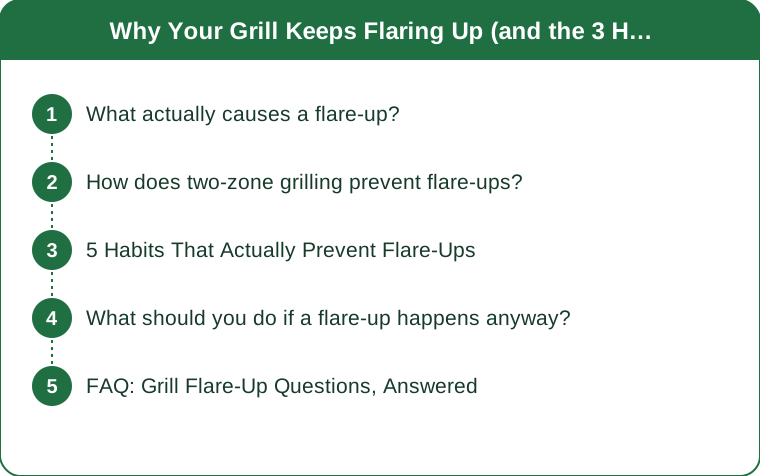
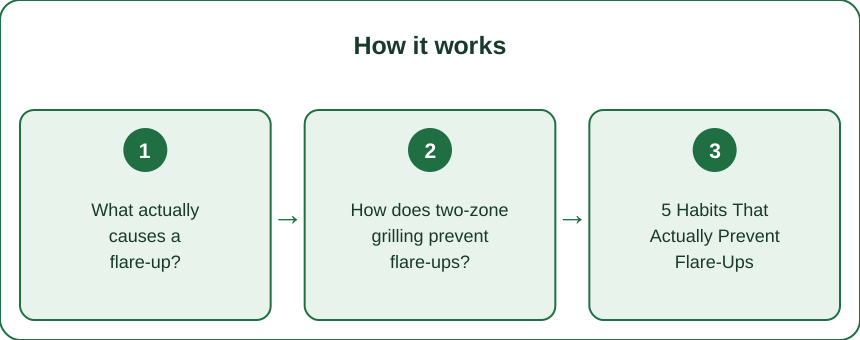
What actually causes a flare-up?
Fat and oil dripping from food onto an open flame or very hot coals ignites instantly because rendered fat is highly flammable — the more fat drips at once, the bigger and more sudden the flame burst.
This is why fattier cuts (chicken thighs with skin, marbled steaks, sausages) flare up far more often than lean cuts like chicken breast or firm white fish, which simply have less fat to drip in the first place.
How does two-zone grilling prevent flare-ups?
Two-zone heat means one side of the grill is hot (direct heat) and one side is cooler (indirect, no direct flame underneath) — fattier foods can sear briefly on the hot side, then move to the cooler zone to finish cooking without continuing to drip onto open flame.
This single setup change prevents the majority of flare-ups because it removes the sustained direct-flame contact that turns occasional fat drips into a real fire, rather than requiring you to constantly move or watch the food.

5 Habits That Actually Prevent Flare-Ups
1. Trim visible excess fat before grilling. Less fat dripping means fewer flare-ups triggered in the first place.
2. Pat marinated food dry before it hits the grate. Excess marinade oil is a major, underrated flare-up trigger.
3. Keep the lid mostly closed. Reducing oxygen flow to the flame limits how large a flare-up can grow even if one starts.
4. Clean grease buildup from the grill grates and drip tray regularly. Old grease buildup ignites more easily and burns longer than fresh drips.
5. Keep a spray bottle of water nearby, not as a fix-all but a quick knockdown. Useful for small flare-ups, though moving food to indirect heat is the better first response for bigger ones.
What should you do if a flare-up happens anyway?
Move the food to the indirect (cooler) zone immediately rather than trying to grill through the flames — this stops the char without requiring you to remove food from the grill entirely.
Avoid the instinct to close the lid completely and starve it of oxygen all at once with food still directly over the flame — moving food first, then adjusting airflow, is more reliable than trying to smother it in place.
FAQ: Grill Flare-Up Questions, Answered
Are flare-ups worse on gas grills or charcoal grills?
Both can flare, but charcoal grills tend to have more sustained, harder-to-control flare-ups since you can’t instantly lower flame output the way you can turn down a gas burner.
Does marinade oil really make that much difference?
Yes — excess surface oil is one of the most common and easily preventable flare-up triggers, more so than the marinade’s flavor ingredients themselves.
Is a small flare-up actually bad for the food, or just visually alarming?
A brief flare-up mostly affects the exterior with char and slight bitterness; the real concern is a flare-up sustained long enough to burn the food’s surface or coat it in soot from incomplete combustion.
TL;DR:
- Flare-ups come from fat drips hitting open flame — more fat means more frequent flare-ups
- Two-zone heat (hot side + cool side) prevents most flare-ups without constant monitoring
- Trim excess fat, pat marinated food dry, and keep the lid mostly closed
- If one happens, move food to indirect heat first rather than smothering it in place
Set up two zones before you start cooking — it’s the single change that prevents more flare-ups than any amount of watching the grill closely.
Keep Reading
This article is for general informational purposes only and is not medical advice. Always consult a qualified health professional for guidance specific to you.