30-Minute Marinades: What Actually Works and What Never Will
Quick Answer: Most marinade flavor stays within the outer few millimeters of the meat no matter how long it soaks - only salt travels meaningfully deep. That is why a well-built 30-minute marinade (salt or soy for depth, acid for surface brightness, oil to carry aromatics, a touch of sweet for browning) delivers most of what an overnight bath does. Thin cuts respond best; dense roasts want a dry brine instead; and sugar-heavy mixtures belong brushed on at the end, not soaked in from the start.
The overnight marinade is one of cooking’s most durable rituals - and one of its most oversold. Understanding what a marinade physically can and cannot do turns a weeknight liability into a 30-minute weapon, right in the heart of grilling season.

What does a marinade actually do?
Less than the recipe headnotes claim, in ways that are liberating once you see them.
Big flavor molecules stop at the border. Garlic, herbs, spices, citrus oils - the aromatic compounds that make a marinade taste like something - are too large to migrate far into muscle tissue. Test kitchens that cut marinated meat open find seasoning concentrated in the outer couple of millimeters, whether the soak lasted thirty minutes or overnight. The interior of that 12-hour chicken breast is, flavor-wise, mostly plain chicken.
Salt is the one deep traveler. Dissolved salt - from kosher salt, soy sauce, or fish sauce - genuinely penetrates over time, seasoning inward and helping the meat hold moisture through cooking. A marinade with real salt content is functionally a flavored wet brine, and the brining is most of what you taste as depth.
Acid works the surface, for better and worse. Citrus, vinegar, and yogurt denature surface proteins - a light touch brightens flavor and tenderizes the exterior; a long soak turns the outside of chicken or shrimp mushy and chalky. Acid is a seasoning here, not a tenderizer of any meaningful depth.
Oil is the delivery system. Many aromatic compounds dissolve in fat rather than water, so oil carries garlic and herb flavor onto the surface evenly and doubles as grill-grate insurance against sticking.
Put together, the picture is clear: a marinade is a surface treatment plus a salt delivery mechanism. Surfaces saturate fast - which is exactly why 30 minutes gets you the large majority of the effect, and why the overnight version was always mostly a scheduling choice wearing a chef hat.
What should be in a 30-minute marinade?
A formula, not a recipe - it adapts to whatever the pantry has.
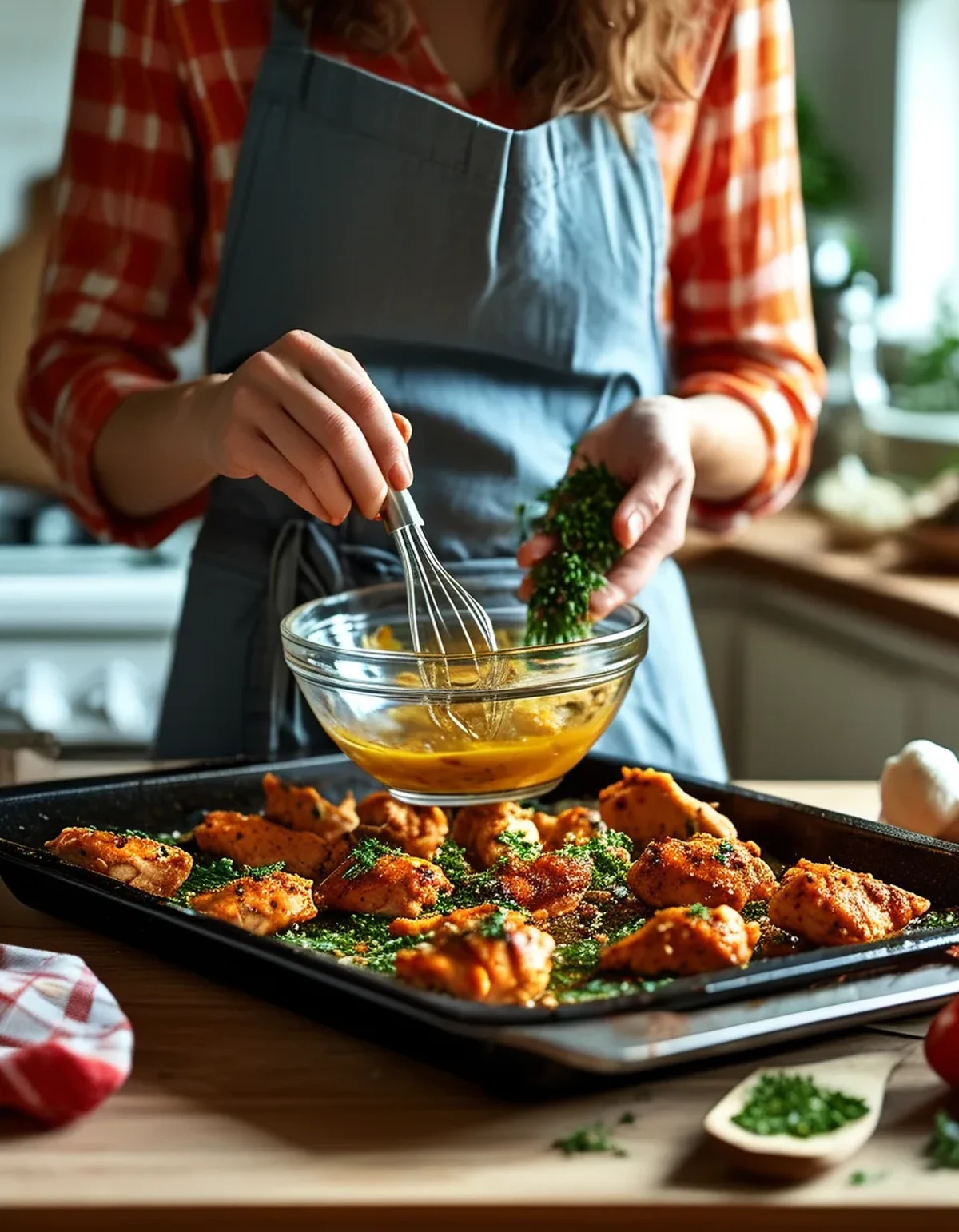
The five slots: salt (kosher salt, soy sauce, or fish sauce - the depth engine), acid (lemon, lime, vinegar, or yogurt - the brightness), fat (olive or neutral oil - the carrier), aromatics (garlic, ginger, herbs, chile, spices - the personality), and a small sweet (honey, brown sugar - the browning assist). Rough working ratio: three parts oil, one part acid, salt to genuinely taste, aromatics with a heavy hand, sweet with a light one.
Maximize surface area, because surface is all you get. Thin cuts outperform thick ones by design: chicken thighs opened flat, skirt and flank steak, shrimp, cutlets, tofu slabs, vegetables. For thicker pieces, score the surface in a shallow crosshatch - every cut is new territory the marinade can reach.
Use a zip bag and evict the air. A bag pressed flat with air squeezed out keeps every surface in contact with liquid using half the marinade a bowl needs. Flip it once at the midpoint and the coverage is complete.
Let the 30 minutes be the counter time. For thin cuts headed to a hot grill, marinating at room temperature while the grill preheats is standard practice and stays inside food-safety windows - and surface temperature matters for the sear. Anything longer goes to the refrigerator.
Pat before it hits the grate. Wet surfaces steam before they sear. A quick pat with paper towels removes the standing liquid while leaving the salt, oil film, and clinging aromatics - the flavor stays, the sear returns.
And taste the marinade before the meat goes in. It should taste slightly too intense on its own - a surface treatment has one thin layer to make its entire argument.
5 Marinade Mistakes Everyone Makes
1. Believing longer equals deeper. The flavor plateau arrives within the first hour for most cuts; after that you are running a refrigerator experiment, not building taste. Overnight is fine for schedule reasons - it is just not accomplishing what the recipe implied, and for delicate proteins it is actively working against you.
2. Long acid baths on delicate proteins. Shrimp in citrus for three hours arrives at the grill half-ceviche; chicken breast in heavy vinegar overnight grills up with a mealy, chalky jacket. Acid-forward mixtures want short exposure - 15 to 30 minutes for seafood, under a few hours for poultry. Yogurt is the gentle exception, which is why it earned its tandoori reputation.
3. Sugar-heavy marinades over direct flame. Honey and brown sugar char into bitterness long before the inside cooks. Anything glaze-sweet - barbecue sauce, teriyaki, honey-garlic - belongs brushed on in the final minutes, after the cooking is mostly done. Marinate with the savory tier; finish with the sweet one.
4. Reusing raw marinade as sauce. The liquid that bathed raw chicken carries raw-chicken bacteria. Either reserve a clean portion before the meat goes in - the professional habit worth stealing - or boil the used marinade hard for several minutes. Pouring it straight over the finished platter is the shortcut nobody should take.
5. Marinating in the wrong container, blind. Reactive metal bowls can pick up off-flavors with acidic mixtures over time; more practically, bowls waste marinade and leave surfaces exposed. The zip bag solves coverage, contact, flipping, and cleanup in one move.
Bonus: seasoning timidly because it is only 30 minutes. Short soaks want bold mixtures - double the garlic, salt like you mean it. Intensity compensates for duration, and the surface is the whole show.
Which proteins and vegetables respond most?
Spend the 30 minutes where the return is highest.
Best responders: the thin and the porous. Skirt and flank steak (loose grain, huge surface), chicken thighs (forgiving and flavor-hungry), shrimp (minutes, not hours), pork tenderloin medallions, firm tofu (pressed first - it drinks marinade like nothing animal-based), and halloumi. These cuts are mostly surface, and surface is the marinade’s entire jurisdiction.
The vegetable tier is criminally underrated. Mushrooms and zucchini absorb marinade genuinely - not just surface-coating - and August is their moment: thick zucchini planks, portobello caps, and eggplant rounds in a soy-garlic-balsamic mixture out-flavor most marinated meats at a fraction of the cost. Bell peppers and red onion take a lighter, faster gloss.
Poor responders: the thick and the dense. Whole chicken breasts, pork loin roasts, thick-cut chops - the interior never hears about the marinade. These want a dry brine instead: salt (plus spices) rubbed on and given time, uncovered in the refrigerator, which seasons deeper, dries the surface for better browning, and skips the liquid entirely. Finish with a bold sauce at the table and the result beats any soak.
Salmon sits in the short-and-gentle category. Fifteen to twenty minutes with modest acid - miso-maple and soy-ginger being the classic directions - before the surface starts to cure.
The decision tree in one breath: thin or porous, marinate 30 bold minutes; thick and dense, dry-brine and sauce later; sweet flavors, glaze at the end; and when the clock is truly at zero, salt aggressively and let a finishing sauce do the talking - the honest shortcut every grill cook eventually learns to respect.
FAQ: Quick Marinade Questions, Answered
Is 30 minutes really enough time to marinate?
For thin cuts, yes - flavor compounds saturate the surface quickly, and the surface is nearly all a marinade ever reaches. Build it bold (real salt content, generous aromatics), use a flat zip bag with the air pressed out, and the 30-minute result lands remarkably close to overnight. Thick roasts are the exception; they want dry brining instead.
Can you marinate meat too long?
Yes - acid-forward marinades turn shrimp and chicken surfaces mushy and mealy over hours, and heavily salted mixtures can cure the exterior into a ham-like texture over days. Delicate proteins want minutes to a few hours. The one direction overnight reliably helps is salt penetration in sturdy cuts, which a dry brine does better anyway.
Should I rinse or wipe off marinade before grilling?
Pat, never rinse. Standing liquid steams the surface and blocks the sear, so press with paper towels until just tacky - the salt has done its work and the oil film with clinging aromatics stays behind. Sugary marinades deserve an extra-thorough pat, since surface sugar is what burns.
Can I use leftover marinade as a sauce?
Only with a hard boil of several minutes to handle raw-meat bacteria - or, far better, pour off a clean reserve portion before the raw protein ever touches the rest. The reserve trick costs ten seconds, tastes fresher than the boiled version, and removes the food-safety question entirely.
TL;DR:
- Marinades are surface treatments - flavor stops millimeters in, so 30 bold minutes rivals overnight.
- Formula: salt or soy, one acid, three parts oil, heavy aromatics, light sweetness.
- Thin and porous wins: skirt steak, thighs, shrimp, tofu, mushrooms, zucchini. Dense roasts want dry brine.
- Sugar burns - marinate savory, glaze sweet in the last minutes.
- Pat dry before the grate, and reserve clean marinade for saucing before the raw meat goes in.
The overnight marinade was never wrong - it was just 30 good minutes wearing a 12-hour costume. Season boldly and take the evening back.
Keep Reading
This article is for general informational purposes only and is not medical advice. Always consult a qualified health professional for guidance specific to you.